

The Language of Silk
Why This Fabric Speaks Without Words
Silk does not announce itself loudly.
It doesn’t need to.
It moves with the body, reacts to light, and reveals its beauty slowly — in gesture, in drape, in the way it catches a breath or a step. Silk is not a trend. It is a language. And like any refined language, it speaks most powerfully when used with intention.
At Laura Blagogee Couture, silk is never chosen by accident. It is selected because it communicates something about the woman who wears it — elegance, restraint, confidence, and quiet strength.
Silk as Movement
One of silk’s most defining qualities is how it moves.
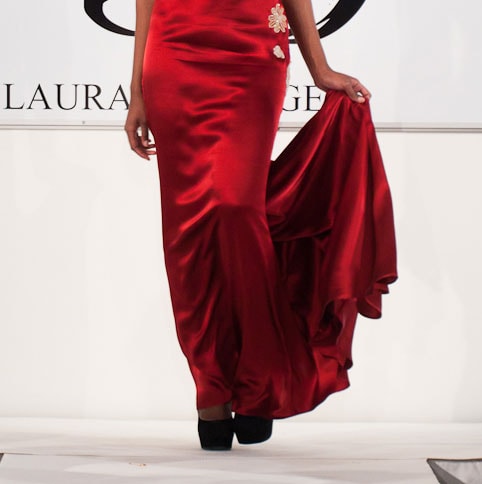
Unlike synthetic fabrics, silk responds to the body rather than resisting it. It flows, folds, softens, and glides. A silk gown never feels stiff or imposed — it becomes an extension of the wearer.
This is why silk is so often chosen for couture pieces:
it allows the garment to live.
In motion, silk tells a story.
In stillness, it holds tension and grace.
Silk and Light
Silk does not reflect light harshly. Instead, it holds a soft, natural luminosity that adds depth rather than shine.
It doesn’t sparkle like embellishment.
Instead, it reflects light softly — creating depth rather than glare. This subtle luminosity is what gives silk its unmistakable luxury. It photographs beautifully, ages gracefully, and reveals its quality over time rather than all at once.
True silk never looks flat.
It has dimension, warmth, and quiet presence.
Different Silks, Different Voices
Not all silk speaks the same language.
- Silk satin whispers elegance and fluidity
- Silk crepe speaks modern restraint and confidence
- Silk organza carries air, structure, and lightness
- Silk chiffon evokes softness and movement
- Silk mikado expresses architectural clarity and strength
Each type of silk has its own personality — and choosing the right one is less about rules and more about resonance.
The question is never “what is fashionable?”
The question is “what feels right?”
Why Silk Belongs in Couture
Couture demands materials that respond to craftsmanship.
Silk can be sculpted, draped, pleated, layered, and shaped without losing its integrity. It allows the designer to build structure beneath while maintaining softness above — the perfect balance between architecture and emotion.
Silk also carries history.
It has been worn, woven, and refined for centuries.
When used in a modern silhouette, it bridges tradition and contemporary design effortlessly
Silk and the Woman Who Wears It
Silk does not overpower.
It enhances.
Women who are drawn to silk often seek elegance without excess. They value quality over noise, detail over display. Silk mirrors that mindset — refined, intentional, and quietly powerful.
It is a fabric for women who don’t need to prove anything.
A Fabric That Lasts Beyond a Moment
In a world driven by fast fashion and instant gratification, silk remains patient. It rewards care, time, and craftsmanship. A silk garment does not belong to one season — it becomes part of a personal archive.
This is why silk feels timeless.
Not because it never changes — but because it never loses relevance.
The Language of Silk
Silk speaks in nuance.
In touch.
In movement.
In light.
It is not loud.
It is not fleeting.
And when chosen well, it never needs explanation.